
Blog
Do you have a parent living alone? Know every day that everything is okay, without having to call
Want to know your parent living alone is doing fine without calling every day? With aQuickCheck, your parent confirms with one tap that everything is okay.
Why a daily check-in is important for seniors living alone
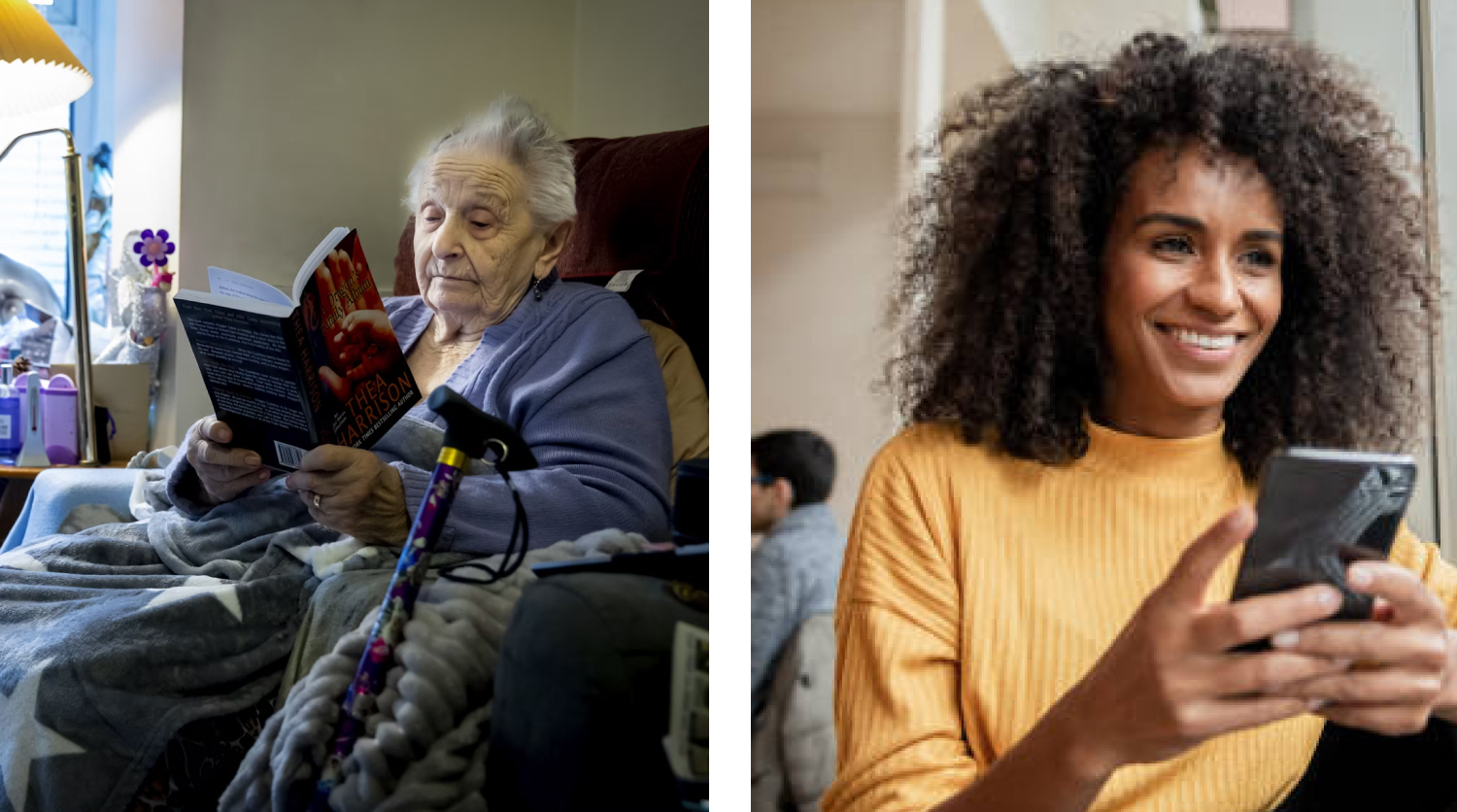
Living alone is not the problem. Many older people actually enjoy their independence, their own rhythm and their own home. The risk lies in what happens when something goes wrong and no one notices.
Falls are a clear example. According to the World Health Organization (WHO), approximately 28 to 35% of people aged 65 and older fall each year, and for those over 70 it’s 32 to 42%. Most falls end well, but if someone can’t get back up and can’t reach their phone, they could lie on the floor for hours. That waiting time can turn a minor injury into a serious one. The same applies to sudden illness, dizziness or an emergency at night. In all these cases, what matters most is how quickly someone discovers it. A simple daily check reduces that time from days to hours, or even less.
Remote care: the problem with calling every day
The most obvious solution is a daily phone call. That works for a while, but in practice it often creates new problems:
- Your parent feels controlled. A phone call that’s only meant to check if everything is okay quickly feels like control instead of care.
- It becomes an obligation. Busy work days, vacations and time differences make a fixed daily phone call hard to maintain.
- A missed phone call causes panic. They’re in the shower, in the garden or at the doctor’s office, and you’re already worried.
- One person bears the burden. Often one person ends up taking on all the care.
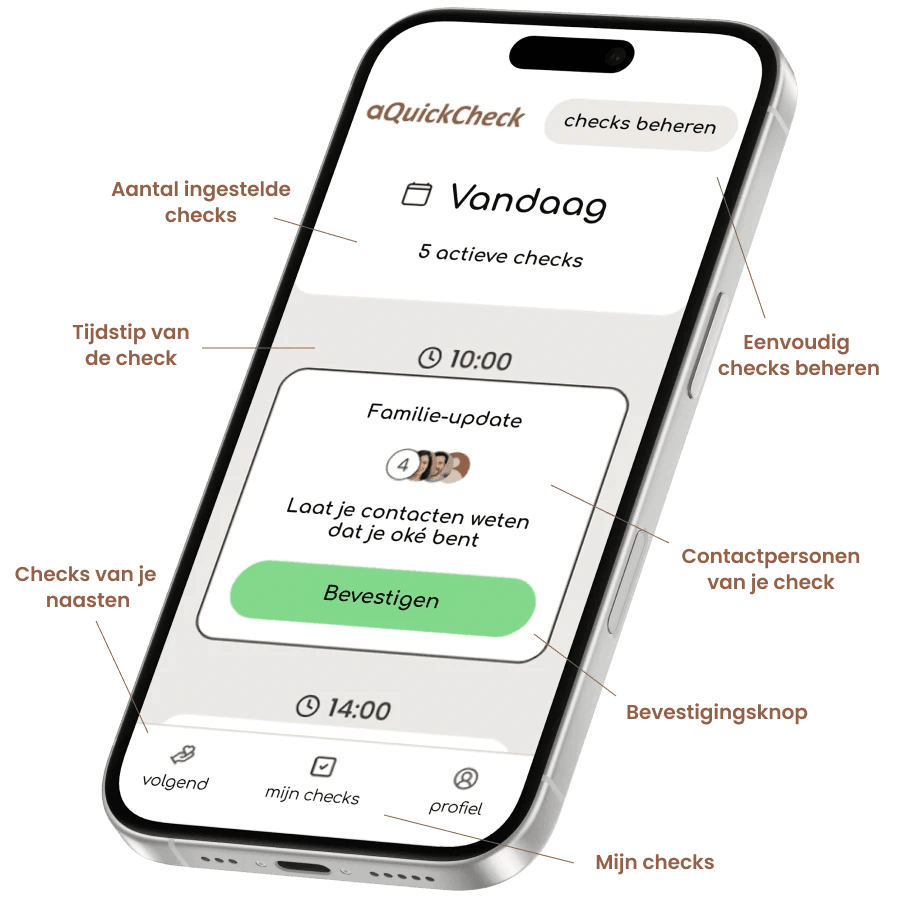
That’s why we developed aQuickCheck. Your parent confirms a check with one tap at a time of their choosing. Confirmed? Then you hear nothing and you know everything is fine. If the check and reminders are missed, you and the other contacts get notified right away. No daily phone calls, no sense of control: no news is good news.
Check-in app for seniors: 7 ways aQuickCheck makes it easier
Knowing your father or mother is okay shouldn’t require daily phone calls, worries or guesswork. With aQuickCheck, it takes your parent one tap and you zero effort. Here’s how it works.
1. A daily check with one tap, instead of a phone call
Your parent receives a check at a set time and confirms it with one button. That’s it. No conversation needed, no complicated app and no “are you okay?” phone call that you have to remember. The app works on iPhone and Android.
2. Daily checks at times that work for your parent
Your parent chooses the days and times themselves, for example: every day at 09:00 after breakfast, a second check at 21:00 before bed, or only on certain weekdays. Check scheduled but busy at check time? The check can be confirmed up to an hour in advance, so a visit to the doctor or the market never triggers a false alarm.
3. No news is good news: silence means everything is fine
If your parent confirms the check, no one gets a message. You don’t have to open or read anything. You simply know everything is going well. That’s the core of aQuickCheck: no news is good news.
4. Reminders before caregivers are alerted
Forgot to tap? Your parent gets one reminder first, then a second one that you can set as you like. Only when those are missed too do contacts get notified. This keeps false alarms to a minimum.
5. Get notified immediately if your parent misses a check
If a check and reminders are missed, you and the other contacts get notified right away, so you can call or visit. Your parent sees on screen that contacts have been notified.
6. Remote care with the whole family
Add as many contacts as you want: brothers and sisters, grandchildren, a neighbor or a volunteer. You can even choose different contacts for each check, for example your sister for the morning and your brother for the evening. aQuickCheck is always free for contacts.
7. All contacts know who’s already reaching out
As soon as one contact responds to a missed check, the others are informed. You can also see on the missed check if someone has already made contact. No duplicate calls and not three family members at your door at the same time.
What happens if your parent misses a check?
If your parent doesn’t confirm the check, one or a second reminder follows, which you can set yourself. Only when the reminders you’ve set are missed do contacts get a notification.
As soon as one contact reaches out, the others are informed. So not everyone calls at once or shows up at the door at the same time. Your parent also sees on screen that contacts have been notified.
Tips for a daily check that works
- Plan one to three checks a day, spread evenly. Too many checks lead to unnecessary notifications.
- Link checks to regular habits, like morning coffee or the evening news.
Real-life example: Martin’s father lives alone
Martin’s father is getting on in years and lives alone. Martin set up two checks on his father’s phone: one in the morning and one in the evening. Martin and his sister are both contacts.
“He missed a check once and my sister and I got notified right away. It turned out everything was fine, but I’m still glad you get notified if something might be wrong.” Martin, aQuickCheck user
That’s the balance most families are looking for. No daily phone calls, no sense of control, and a quick notification on that rare day when something might be wrong.
Independent living for seniors, peace of mind for you
Keeping an eye on your parent who lives alone doesn’t mean you have to call every day or diminish their independence. With a regular daily check you know everything is fine, and you get a quick notification on the day it might not be.
That’s exactly what aQuickCheck is made for. Your parent taps once, you hear nothing, and you know everything is good.
No news? … good news!
Try aQuickCheck free for one month, with no obligations. Download the app for iPhone or Android and set up the first check for your parent today. Want to know more? Read our page for caregivers or for independently living seniors.
More articles

28 August 2026
Adapting your home without major renovations
15 August 2026
The benefits of aQuickCheck for independent living at home
Download the aQuickCheck app
Available for iPhone and Android.